

Managing an online casino account requires more than choosing a username and password. For Canadian players at log in Vegas Hero Casino, the account settings panel serves as the control hub for security, responsible gaming, payments, and privacy. A correctly configured account secures funds, expedites withdrawals, and guarantees compliance with Canadian anti-money laundering rules and provincial standards. Many users overlook these settings during sign-up and later face preventable verification delays or payout holds. Learning each control early removes frustration. The following sections cover the full account lifecycle—registration, document submission, two-factor authentication, deposit limits, contact updates, password recovery, login troubleshooting, withdrawal configuration, and account closure—reflecting the actual interface a Canadian player will experience.
Setting up Your Vegas Hero Casino Account from Canada
Enrollment uses a clear multi-step form. The first screen asks for an email address and a password that must contain at least eight characters, mixing uppercase, lowercase, and a number or symbol. After sending, the system delivers a time-limited verification link to verify ownership and block fraudulent sign-ups. The next stage requests full legal name, date of birth, gender, and complete residential address including province and postal code. This address must correspond to government-issued identification exactly because it will be cross-checked during KYC verification. A mobile phone number is also mandatory for two-factor authentication codes or urgent alerts. The platform determines the user’s location via IP and adjusts the currency to Canadian dollars when available; otherwise, the player chooses CAD manually. The ultimate step demands accepting terms, the privacy policy, and acknowledging the player meets the legal gambling age—18 or 19 depending on the province.
Safeguarding Your Sign-in with 2FA Authentication
Beyond a robust password, two-step verification is the best supplementary layer. After activation, login from an unrecognized device needs a time-based one-time code from an authentication app on the member’s phone. The code updates every 30 seconds and cannot be reused, so an intruder who captures the password cannot access the account without the accessible device. Setup requires minutes and does not demand sharing a phone number, as the app produces codes offline.
To turn on 2FA, the player opens the security settings, chooses the option, and scans the displayed QR code with an app like Google Authenticator or Authy. The app instantly commences creating codes linked to that account. The casino then asks for one present code to verify the setup. Later, login demands the email, password, and the six-digit code. The system also offers one-time backup codes; these need to be saved securely away from the principal device to enable restoration if the phone is stolen or broken.
Account Recovery and Restoring Account Access
Restoring access after a forgotten password initiates with the “Forgot Password” link. The member submits the email on file, and the system sends a unique reset link that is valid for one hour. Accessing it shows a page to establish a new password meeting strength criteria. If the email does not arrive, looking in the spam folder and confirming the precise address—including any full stops or plus tags in Gmail—often fixes the problem.
When two-factor authentication is inaccessible because the handset is missing, restoration relies on the backup methods established beforehand. Recovery codes generated during 2FA activation offer the fastest resolution. Without them, the player must contact support via live chat or electronic mail and go through identity verification like the first KYC process, potentially involving a live photo with the ID. This verification may require 24 to 48 hours, so storing backup codes securely and keeping recovery contact methods updated is essential. No genuine support representative will ever demand the account password; such demands suggest a fraudulent attempt.
Common Login Problems and Possible Solutions
The majority of login failures fit into predictable categories. A wrong password is the leading cause, frequently because of caps lock, a saved password, or an incorrectly entered character. Before a reset, typing the password within a plain text editor to check for hidden errors and subsequently pasting it into the login field can rule out keyboard layout issues. Upon multiple failed attempts, the account temporarily locks for 15 to 30 minutes as a security measure; waiting out the timer and providing the correct credentials remains the sole solution.
Geolocation restrictions also block access. Several provinces have separate regulatory frameworks, and the gambling site may not hold a licence for each jurisdiction. A player travelling from British Columbia to a region with different online gambling laws may find the account unreachable. Employing a VPN or proxy to get around these restrictions infringes the terms of service and usually triggers an automatic security suspension. Browser-based problems—corrupted cookies, aggressive ad-blockers, or old versions—can also interfere with the login flow. Clearing the cache, disabling extensions temporarily, or using a different browser usually fixes these technical glitches without account intervention.
Modifying Personal and Contact Information
Ensuring personal details current prevents verification deadlocks and missed communications. Players can edit their residential address and postal code directly in the dashboard, but any change almost always triggers a re-verification request. The compliance team will ask for a new proof of address matching the updated location before lifting withdrawal restrictions. Timing an address update carefully—completing verification for the new address before requesting a large cashout—prevents delays.
Email address changes need confirmation from both the old and new inboxes to prevent account takeover. Phone number updates are simpler, though the casino may send a verification code to the new number. Canadian players should ensure contact details remain accurate because time-sensitive messages about bonus eligibility, document requests, and withdrawal processing depend on reachability. An expired email or outdated phone number can cause missed deadlines and temporary restrictions. Notification preferences, in a separate tab, let players manage which emails and SMS messages they receive—promotions, transaction confirmations, or security alerts.
Managing Deposit Limits and Session Controls
Responsible gaming tools are located in the account settings and enable players to establish independent deposit, loss, wager, and session time limits. Deposit caps can be applied daily, weekly, or monthly and take effect in real time. A daily limit of C$100, for example, prevents any further deposit attempts within that 24-hour window regardless of the payment method. Reducing a limit takes effect immediately; increasing it triggers a cooling-off delay of at least 24 hours to discourage impulsive decisions.
Session time controls work differently. A player can set up a pop-up reminder after a set number of minutes of continuous play, indicating elapsed time and giving a chance to log out. This nudge won’t block the account but supports harm-minimization. The dashboard also displays a reality check with total deposits, withdrawals, and net position over selectable periods. For stricter control, self-exclusion options restrict access for a chosen duration, from 24 hours to several months. Configuring these settings before play offers a practical safety net that is more reliable than willpower alone.
Grasping the KYC Verification Needs
Know Your Customer checks are mandatory for any authorized Canadian entity. They verify identity, age, and residential address while blocking money laundering. Vegas Hero Casino typically demands documents after the first deposit or once cumulative withdrawals hit a threshold. Sending documents preemptively, rather than waiting for a prompt, often reduces payout processing. The requirements divide into three categories, each covering a distinct verification need.
Evidence of Identity
The primary document must be a valid, government-issued photo ID—a Canadian passport, provincial driver’s licence, or provincial photo card. It must be still valid and display all four corners clearly in a scan or photo, with no glare blocking the name, date of birth, or expiry date. The upload portal supports JPEG and PDF files up to a stated size limit. Poor image quality causes rejection and extra processing days. A flatbed scanner often yields better results than a smartphone camera by removing blur and uneven lighting.
Evidence of Address
This document verifies the residential address entered at sign-up. Acceptable proofs for Canadian residents include a recent utility bill, bank or credit card statement, municipal tax bill, or government correspondence. The document must contain the player’s full name, the complete matching address, and an issue date within the last three months. Digital statements retrieved from online banking are generally recognized if they include the issuer’s logo and relevant dates. Mobile phone bills and insurance documents may also be eligible, but players should review the help centre for the current list. Address mismatches—often resulting from a recent move—are a frequent source of verification delays.
Verification of Payment Method
When a player deposits by card or e-wallet, the casino may request evidence that the method is tied to the account holder. For credit and debit cards, this means submitting images of the front and back with the middle eight digits and CVV hidden; only the first six and last four digits and the cardholder name should be shown. Interac e-Transfer users may require a screenshot from their online banking portal showing the transaction and account holder name. E-wallet users provide a profile page screenshot. Neglecting to supply payment method proof can hold withdrawals indefinitely, so handling this step early avoids frustration.
Payout Preferences and Payment Method Administration
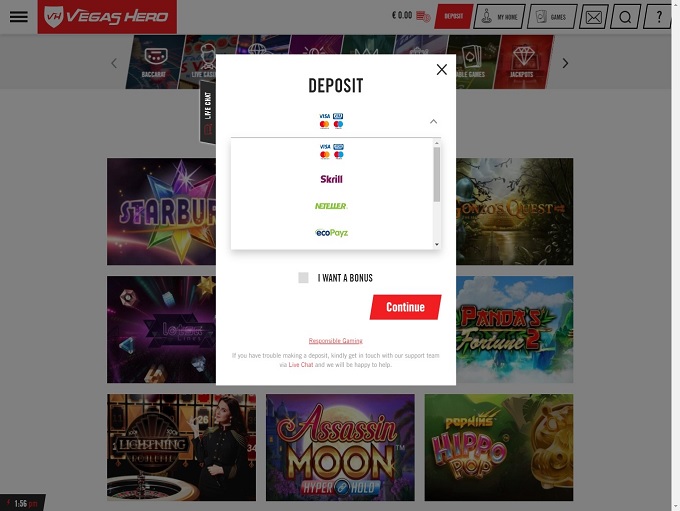
The financial settings section governs how money transfers in and out, and its setup directly influences withdrawal speed. Canadian players can link Interac e-Transfer, Visa and Mastercard debit and credit cards, and various e-wallets. A critical rule is the payment method hierarchy: withdrawals must first be returned to the deposit method up to the deposited amount before any remaining balance can go to an alternative method. This anti-money laundering protocol means a player who deposited by credit card cannot immediately cash out the full balance to an e-wallet.
Within the withdrawal settings, each saved method must show the account holder name exactly matching the casino account; mismatches are a primary cause of rejections. The panel also presents pending withdrawal statuses and any wagering requirements associated with active bonuses. Interac deposits are near-instant, but Interac e-Transfer withdrawals require manual finance team approval and then take one to three business days to reach the bank account. E-wallet payouts are generally the fastest once the account is fully verified. Minimum and maximum transaction limits depend on method, so players planning large cashouts should review these caps in advance.
Suspending, Freezing, and Self-Excluding an Account
Knowing how to take a break or permanently close an account is as crucial as creating one. The self-exclusion feature in the responsible gaming section lets a player to block their own access for a set period. Once enabled, the system blocks login, stops all marketing, and instantly returns any withdrawable balance to the registered payment method—though this may take several business days. Self-exclusion periods range from a 24-hour cooling-off break to indefinite exclusion under provincial programs where the casino operates.
A short-term suspension is distinct from self-exclusion. Players may ask for a suspension for trips or a break without agreeing to a formal exclusion. The account lies dormant and can be reopened by reaching support after a quick identity re-verification. Final closure requires a formal request to the support team. Before closure, any remaining real-money balance must be cashed out, as closed accounts miss cashier access. It is wise to download and store transaction history and gaming activity records beforehand, because access disappears with the account. While Canadian recreational players usually do not pay tax on gambling winnings, maintaining personal records of deposits and withdrawals remains prudent for financial management and any future inquiries from financial institutions about large transactions.